Understanding Your Ford Tractor: A Journey Through Time
Ford tractors, iconic workhorses of the agricultural world, have a rich history. From the innovative 9N, which revolutionized farming with its three-point hitch system (a mechanism for easily attaching implements), to the ever-popular 8N, known for its improved hydraulics and refined design, each model represents a step forward in agricultural technology. For more on the Ford 8N's ignition system, check out this helpful resource: 8N firing order. This guide will help you navigate the intricacies of Ford tractor parts diagrams, regardless of your mechanical expertise. Understanding these diagrams is key to maintaining and repairing your tractor, ensuring it continues to serve you reliably for years to come.
Ford Tractor Parts Diagrams: Your Essential Repair Manual
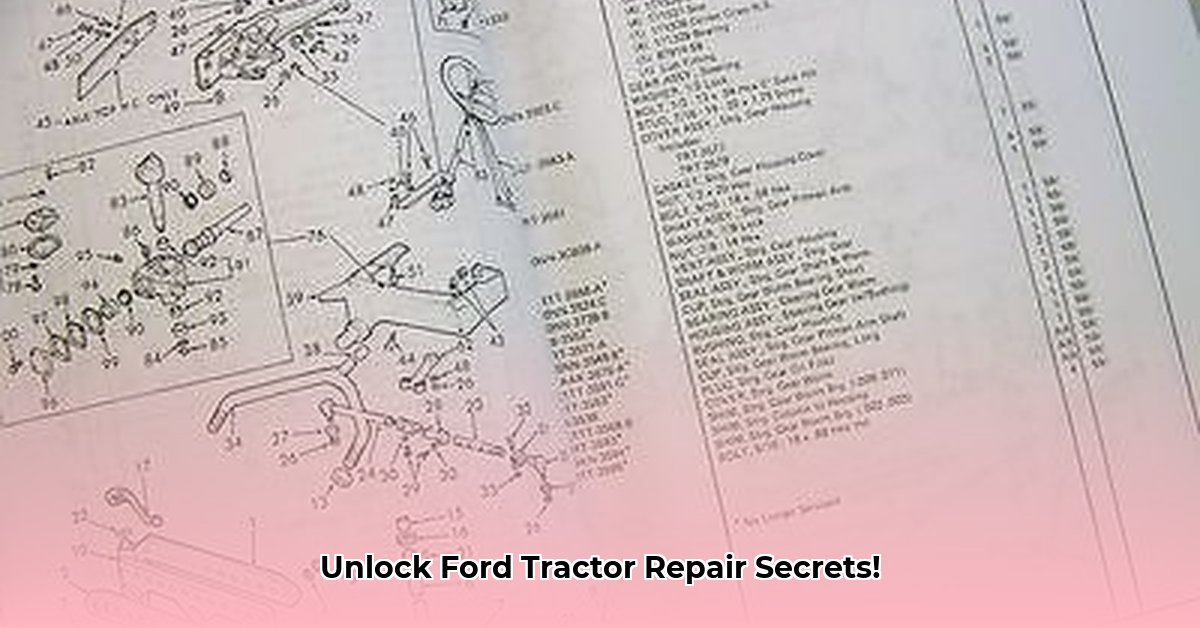
A parts diagram serves as a detailed, illustrated blueprint of your tractor. It's your indispensable guide for understanding the intricate workings of your machine, identifying specific parts, and performing repairs or maintenance. High-quality diagrams are crucial for efficient troubleshooting and repair, saving you valuable time and frustration. They're not just for fixing problems; they're for preventative maintenance as well. Regularly checking your tractor against the diagram can help you spot potential issues before they escalate into major repairs. Have you ever wondered how many parts are in a Ford 8N tractor? It's a complex machine, and a parts diagram brings order to this complexity.
Using Parts Diagrams Effectively: A Step-by-Step Guide
Identify Your Tractor Model: Accurately identifying your tractor's model (e.g., 9N, 2N, 8N) is paramount. This information, usually found on a plate attached to the tractor, ensures you're using the correct parts diagram.
Locate the Relevant System: Parts diagrams are organized by system (engine, transmission, hydraulics, etc.), allowing for quick identification of specific components within a particular subsystem.
Match Part Numbers: Each part has a unique identification number. This number is crucial for ordering the correct replacement part from a supplier.
Careful Examination: Take your time to thoroughly understand the diagram, noting how parts interrelate and function within the system. A little extra time spent here can significantly improve the efficiency of repairs or maintenance.
Utilize Multiple Resources: If you encounter difficulty identifying a particular part, consult different diagrams or online resources.
Common Ford Tractor Problems and Solutions: Preventative Maintenance and Troubleshooting
Parts diagrams aren't just for emergencies. They're crucial for preventative maintenance, allowing you to proactively address potential problems before they become major issues. Regularly checking your tractor and comparing its components to the diagram can prevent small problems from becoming costly repairs.
Here are some common problems and how a parts diagram can help:
| Problem | Potential Causes | How the Diagram Helps |
|---|---|---|
| Worn PTO Clutch | Normal wear and tear, insufficient lubrication | Shows clutch location for easy access and replacement |
| Hydraulic System Leakage | Damaged seals or hoses, loose fittings | Clearly identifies all hydraulic system components for easier fault isolation |
| Engine Misfire | Worn spark plugs, faulty ignition wires, distributor issues | Guides inspection of key ignition system components |
| Difficulty Shifting Gears | Worn gears, linkage problems, low fluid level | Helps identify specific gear components and linkages |
Regular maintenance, guided by your parts diagram, significantly extends your tractor's lifespan and ensures reliable operation. Wouldn't you agree that prevention is far more cost-effective than repair?
Sourcing Ford Tractor Parts: Your Guide to Finding the Right Components
Finding replacement parts for older Ford tractors can be challenging but rewarding. A reliable parts diagram is your first line of defense. It ensures you order the correct part, preventing costly mistakes and ensuring proper functionality.
Here are some resources to consider:
- Online Retailers: Many online retailers specialize in classic tractor parts. Thoroughly research and check customer reviews before placing an order.
- Specialized Forums and Communities: Online forums and communities dedicated to Ford tractors are invaluable resources. Members often share knowledge, advice and contacts for sourcing hard-to-find parts.
- Local Tractor Repair Shops: Local mechanics specializing in vintage tractors can be a great source of information and parts.
Conclusion: Preserving Agricultural History
Understanding and utilizing Ford tractor parts diagrams is essential for maintaining these iconic machines. This guide provides a foundation for effective troubleshooting, preventative maintenance, and sourcing replacement parts. By combining the knowledge in this guide with your dedication, your Ford tractor will provide years of reliable service.